Key TakeawayOn your first scuba dive with La Bombona Diving in Koh Lipe, you’ll start with a short theory briefing, gear up with equipment sized and checked by your instructor, practice a few basic skills in shallow, calm water, then head out to an easy beginner-friendly reef for your first breaths underwater. No certification or prior experience is required. This is called a Try Dive, and it’s the standard first step for anyone trying scuba diving for the first time. |
If you’ve never been underwater before, it’s completely normal to have questions. Will it be scary? Do you need to be a strong swimmer? What if your ears hurt or your mask floods? This guide walks through exactly what happens on your first dive in Koh Lipe, what beginner divers usually feel, and how La Bombona Diving’s small-group approach makes that first breath underwater feel calm instead of overwhelming.
What Happens on Your First Scuba Dive?
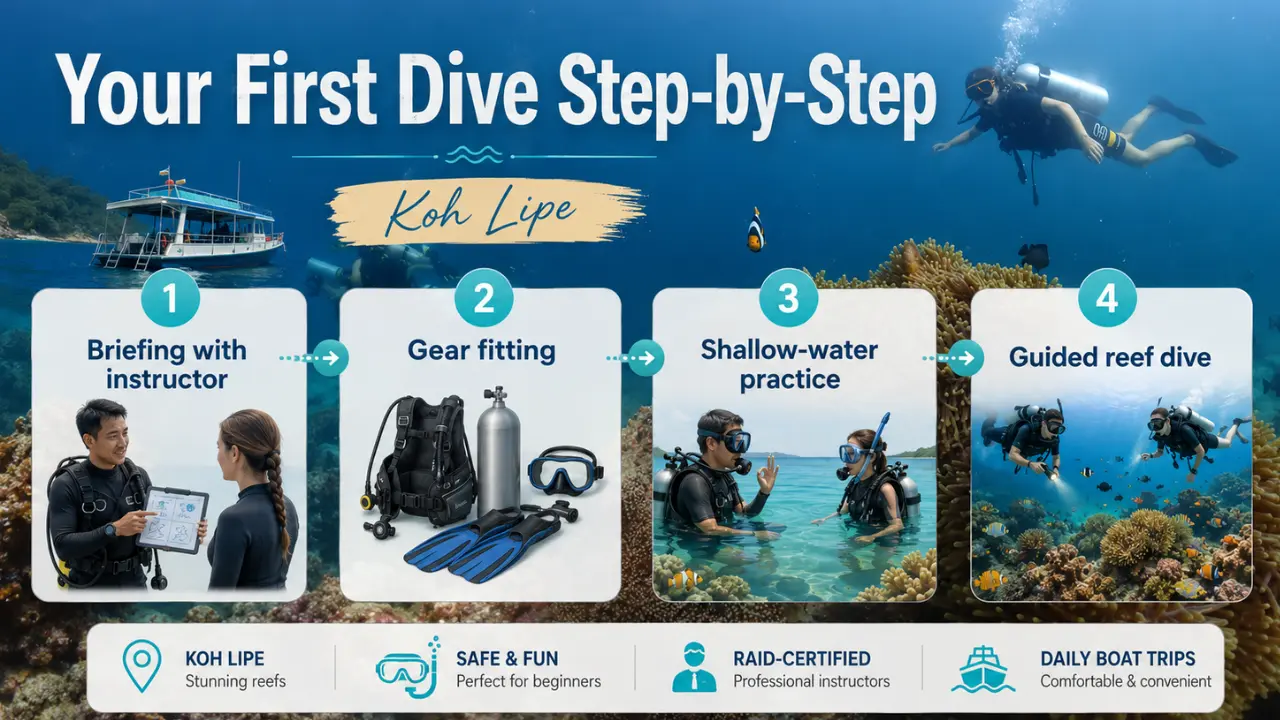
A first dive is slower and more guided than most people expect. You are never handed a tank and asked to figure everything out on your own. Here’s how it usually goes:
- Briefing: Your instructor explains the equipment, basic breathing rules, hand signals, and what to expect during the dive.
- Gear up: You’ll be fitted with a mask, fins, BCD (buoyancy control device), regulator, and tank.
- Shallow-water practice: In calm, shallow water, you’ll practice breathing through the regulator and learn a few simple skills.
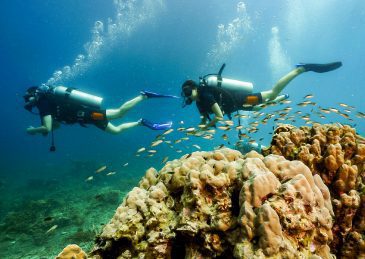
- The dive: Your instructor stays beside you the entire time. You’ll descend slowly to a shallow reef, breathe underwater, float comfortably, and enjoy the marine life around you.
Most first-time divers say the hardest part is trusting that it is safe to breathe underwater. Once they take a few breaths, that feeling usually disappears within a few minutes.
Do You Need Experience or a Certification to Try Diving in Koh Lipe?
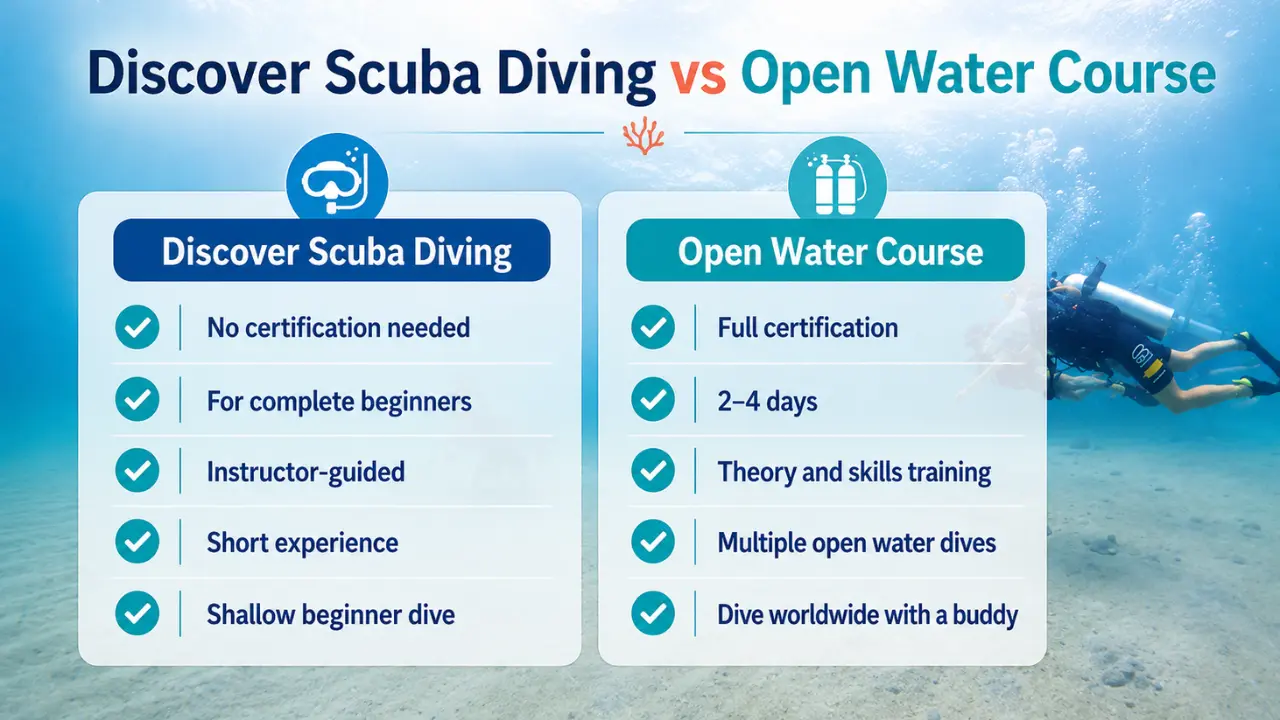
No. If this is your first time diving with a scuba tank, you do not need any certification or previous diving experience. A Bautizo is designed for complete beginners. Your instructor will guide you throughout the experience, either one-on-one or in a small group.
If you already know you want to become a certified diver, you can join an Open Water course instead. The course includes more detailed training and ends with a certification that lets you dive anywhere in the world.
How to Prepare for Your First Scuba Dive
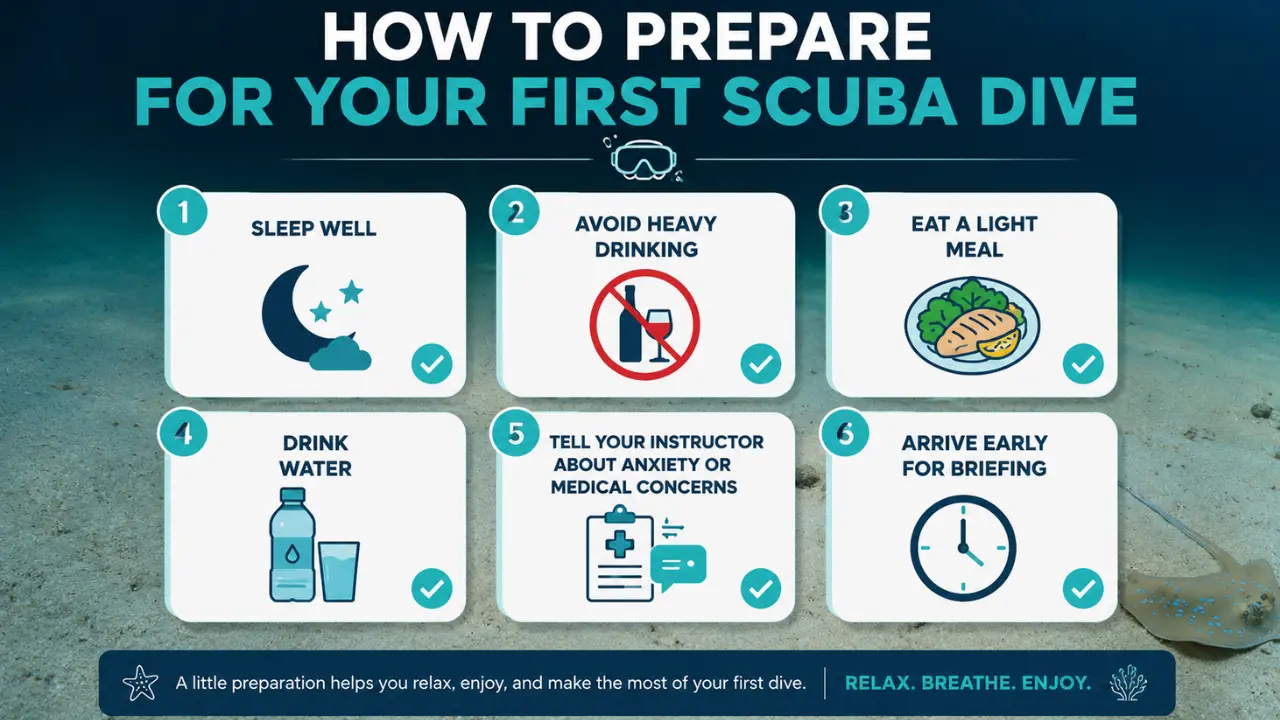
Preparing for your first dive is easier than most beginners think. A few simple steps can make your experience more comfortable:
- Sleep well the night before. Avoid heavy drinking because diving requires a clear mind and steady breathing.
- Eat a light meal before your dive. Avoid eating a heavy meal just before getting into the water.
- Drink plenty of water, especially in Koh Lipe’s tropical heat.
- Tell your instructor about any anxiety, medical conditions, or swimming concerns before you enter the water.
- Arrive a little early so you have enough time for the briefing.
If you’re wondering how to learn scuba diving properly instead of trying it just once, your first dive is where the learning begins. You’ll practice real scuba skills such as clearing your mask, breathing calmly, and equalizing your ears. The instructor teaches everything at a beginner-friendly pace.
What to Bring for Your First Dive
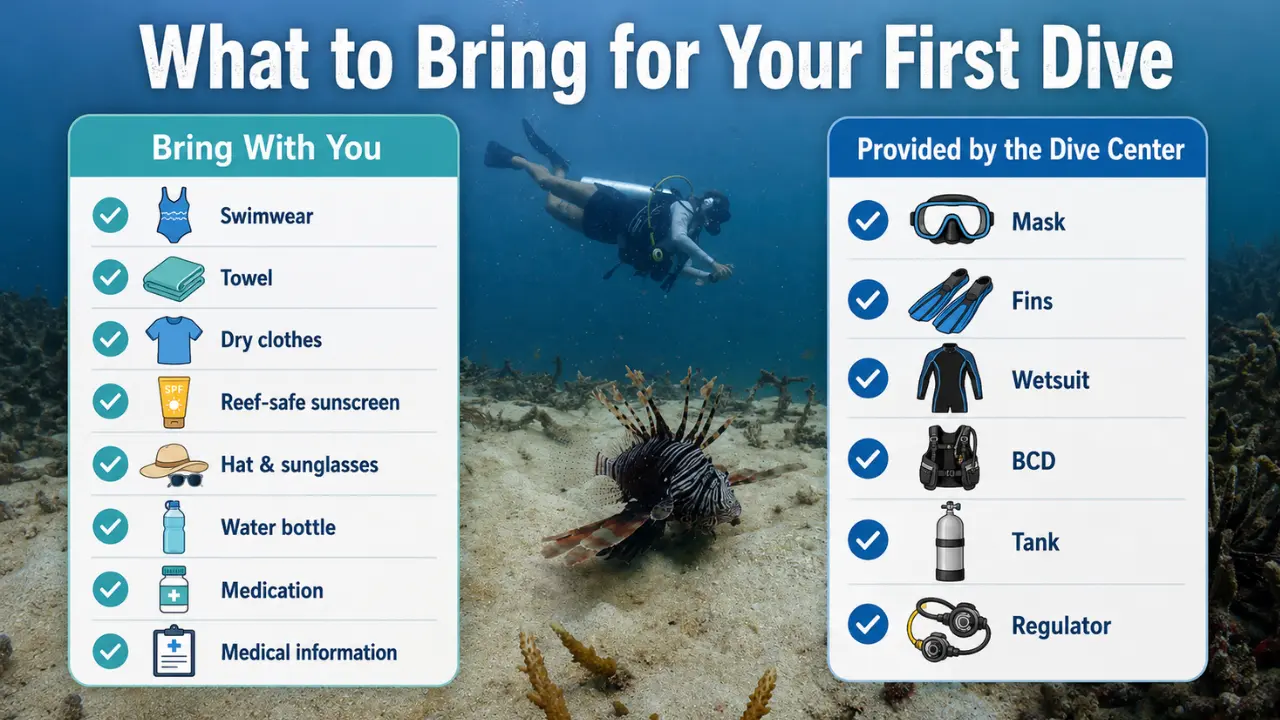
You do not need to buy or bring any scuba gear for your first dive. The dive center provides everything you need, including a mask, fins, wetsuit, BCD, tank, and regulator.
Pack the following:
- Swimwear
- A towel and a change of dry clothes
- Reef-safe sunscreen
- A hat and sunglasses for the boat
- A water bottle
Also, let your instructor know about:
- Any medication you’re currently taking
- Any medical conditions or concerns they should be aware of before your dive
What Happens Before You Get in the Water
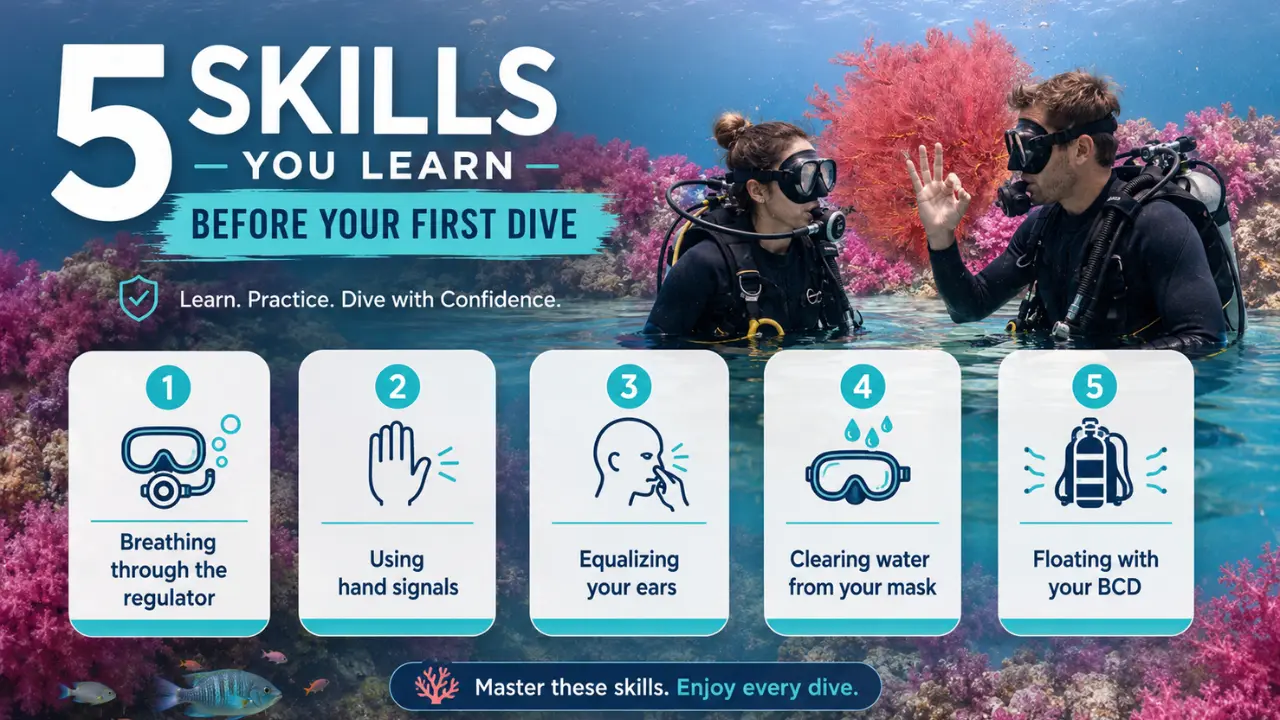
Before your first dive, your instructor explains the basics in simple language. You do not need to worry about complicated diving terms. The briefing usually covers:
- How the regulator helps you breathe underwater
- What the BCD does and how it helps you float or go down
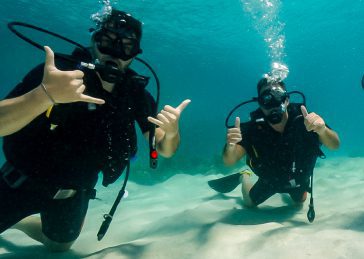
- Basic hand signals such as OK, go up, go down, and something is wrong
- How and why to equalize your ears as you descend
- What to do if a little water gets into your mask
Before you enter open water, you’ll practice these skills in shallow, calm water. In most cases, you can stand or kneel on the bottom while you practice. This gives you a chance to try each skill before the actual dive. By the time you head to the reef, you’ll already know what to do and feel much more confident.
How Deep Do You Go on Your First Scuba Dive?
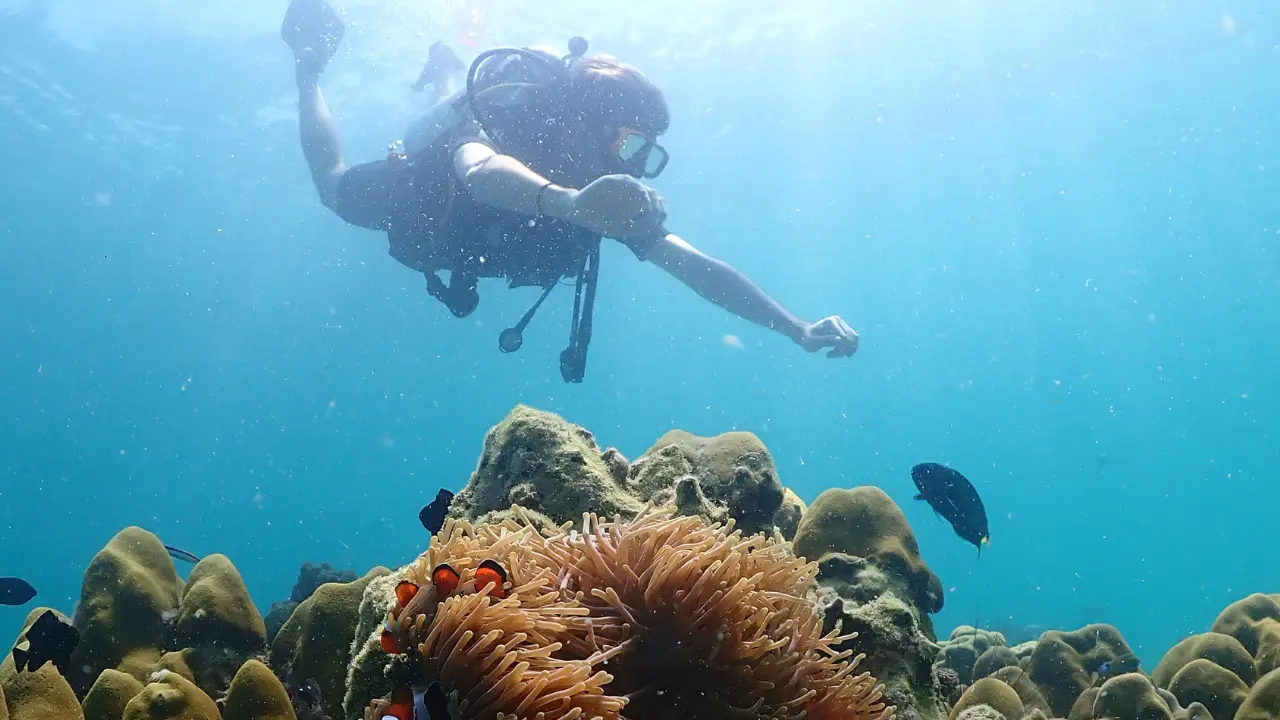
For a Try Dive, the maximum depth is usually around 12 meters (40 feet). Your instructor decides how deep you’ll go based on the water conditions and how comfortable you feel. You do not have to dive to the maximum depth.
Many first dives stay much shallower. Koh Lipe has several beginner-friendly dive sites where you can see colorful reef fish and soft corals even close to the surface.
Is Scuba Diving Safe for Beginners in Koh Lipe?
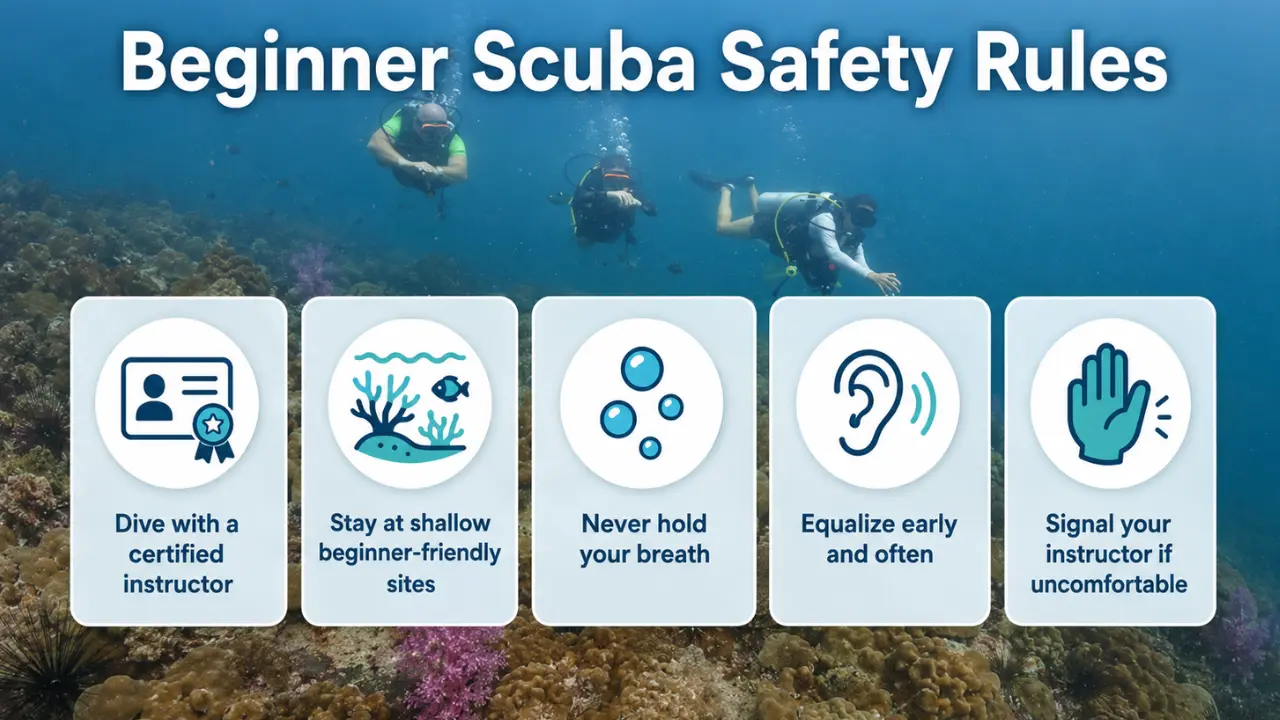
Scuba diving is an adventure activity, but it is very safe when you follow the instructions and dive with a trained instructor. For beginners, a safe first dive depends on a few simple things:
- Dive with a certified and experienced instructor.
- Stay at shallow, calm dive sites that are suitable for beginners. Koh Lipe has several of these.
- Keep breathing normally throughout the dive. Never hold your breath.
- Equalize your ears as you descend. Do not wait until they start to hurt.
- Tell your instructor right away if you feel uncomfortable or have any problems.
Koh Lipe is one of the best places in Thailand for beginner divers. The water is warm, the sea is usually calm, and visibility is often very good. At La Bombona Diving, first-time divers are placed in small groups. This allows instructors to give each person more attention and support throughout the dive.
What Certification Do Instructors Hold? RAID vs PADI
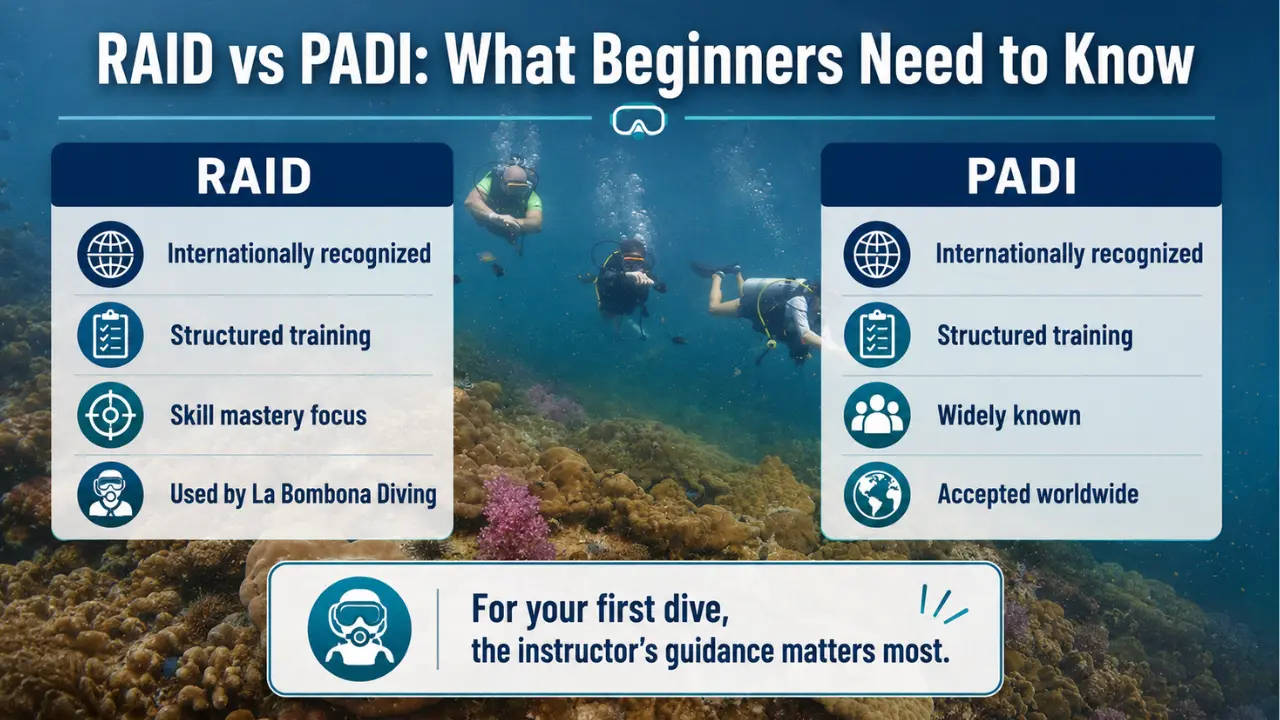
La Bombona Diving teaches scuba courses through RAID (Rebreather Association of International Divers). RAID is an internationally recognized scuba training agency, just like PADI and SSI.
Here are the main differences that beginners usually ask about:
- Course structure: RAID’s Open Water course focuses on helping you master each skill in the water before moving on. Like PADI, it follows a structured training program.
- Recognition: Both RAID and PADI certifications are accepted around the world. If you earn your certification in Koh Lipe, you can use it at dive centers worldwide.
For your first scuba experience, the training agency is not the most important factor. What matters most is having a skilled instructor who gives you personal attention and helps you feel comfortable throughout the dive.
Can You Scuba Dive If You Can’t Swim Well?
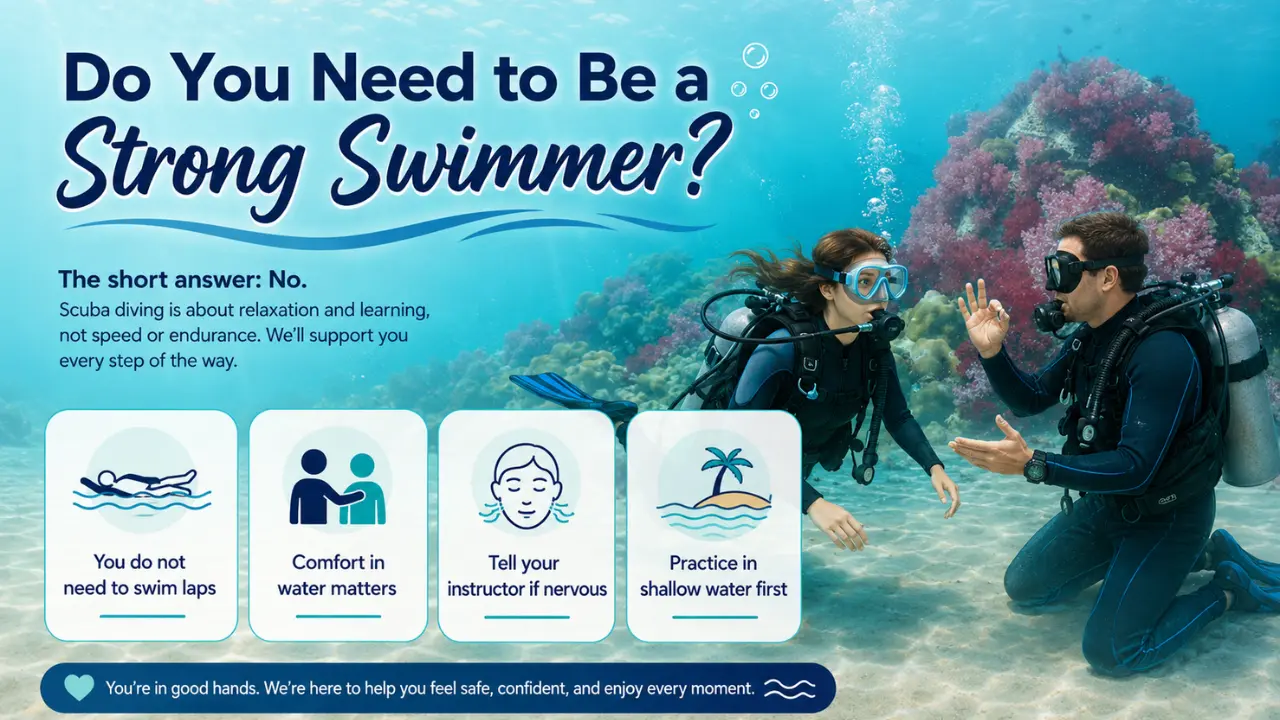
You do not need to be a strong swimmer to try scuba diving. What matters most is feeling comfortable in the water. You should be able to float, stay calm, and follow your instructor’s instructions. Scuba diving is slow and relaxed. You are not swimming laps. You move gently through the water.
If you are a weak swimmer, cannot swim, or feel nervous in the water, tell the dive center when you book your dive. Your instructor can spend more time helping you feel comfortable in shallow water before going to the dive site. You will only enter open water when you are ready.
What If You’re Nervous or Scared Before Your First Dive?
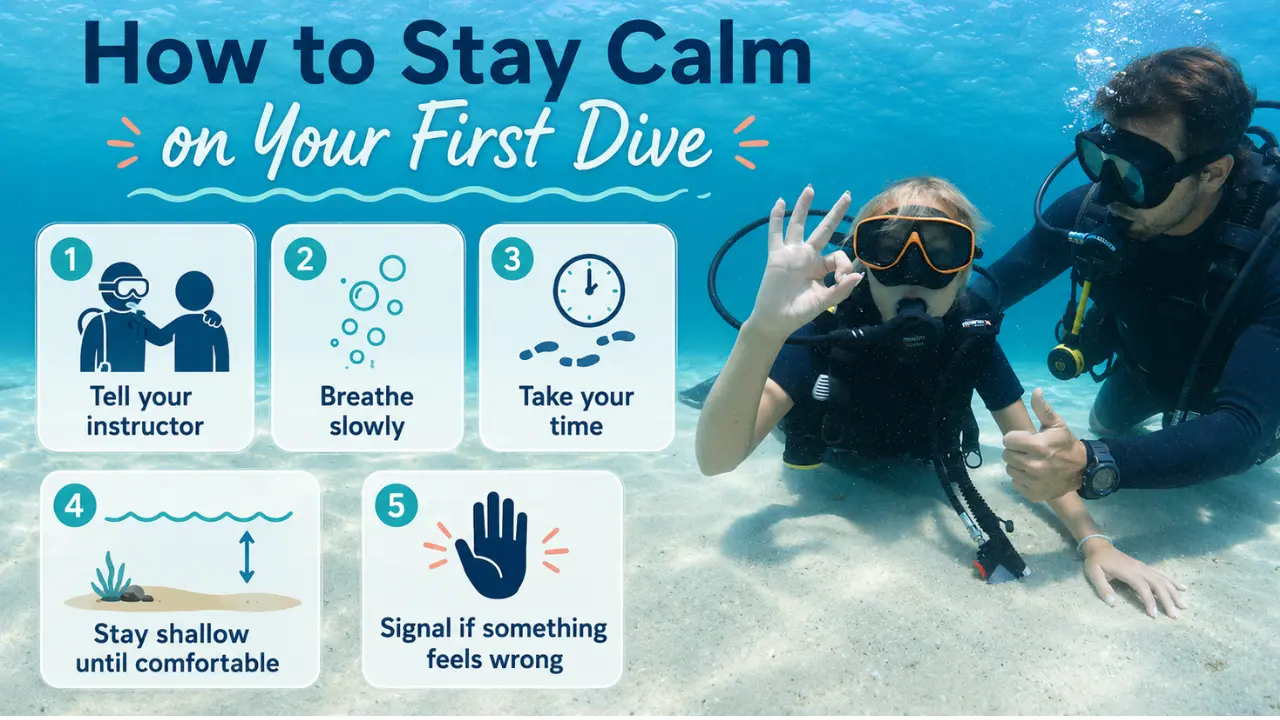
Feeling nervous before your first scuba dive is completely normal. Most beginners feel both excited and a little anxious. Many worry about breathing underwater, using unfamiliar equipment, or not knowing what to expect.
These simple tips can help:
- Tell your instructor if you feel nervous. They can slow down the pace and give you extra support.
- Focus on your breathing during the first few minutes. Slow, steady breaths will help you relax.
- Remember that your instructor controls the pace of the dive. You will not go deeper or faster than you are comfortable with.
- If something does not feel right, stop, keep breathing, and signal your instructor. They are trained to help you.
Most first-time divers say their fear disappears within the first few minutes underwater. Once they realize they can breathe comfortably, they start to relax and enjoy the experience.
What Marine Life Can You See on a First Dive in Koh Lipe?
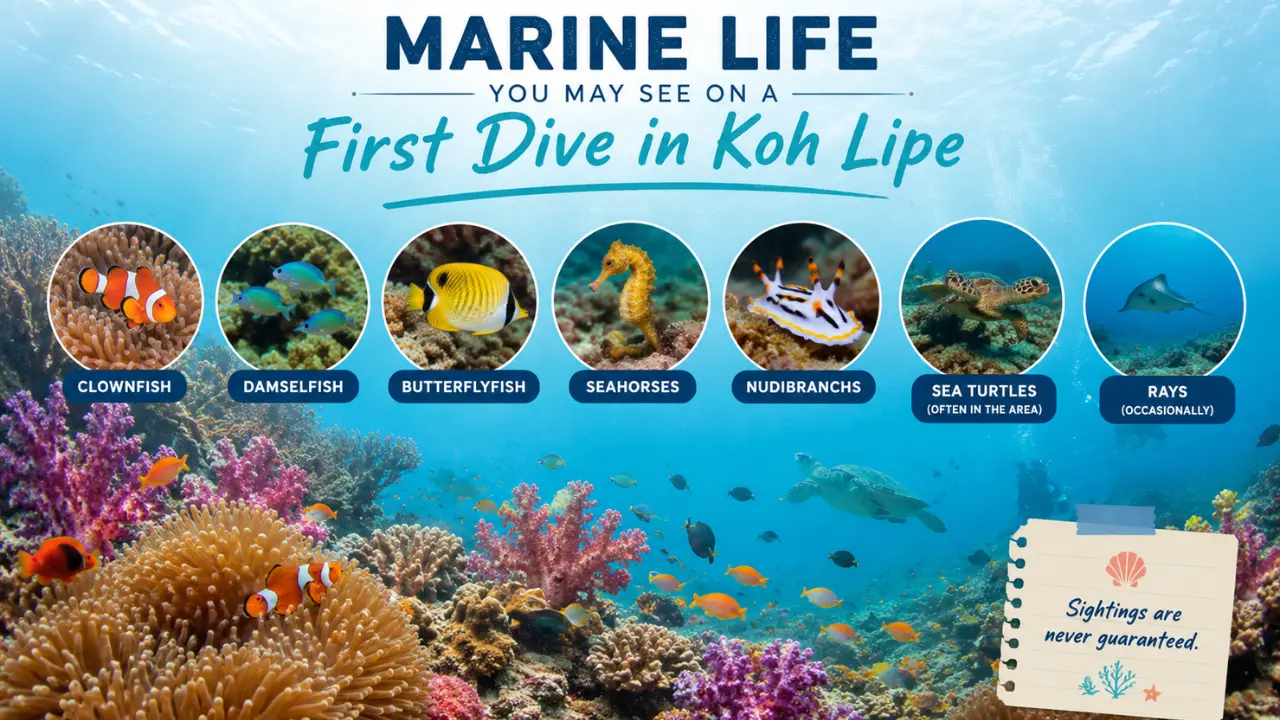
Koh Lipe is close to the Tarutao National Marine Park. The beginner-friendly dive sites here are full of colorful marine life. You may see soft corals in shades of pink and purple, reef fish, seahorses, nudibranchs, and sometimes even turtles or rays.
No dive center can guarantee sightings of specific animals. That is true at every dive destination. Even without seeing a turtle or ray, most first-time divers are amazed by the colorful coral reefs and the variety of fish.
Why Koh Lipe and Small-Group Diving Are Great for Beginners
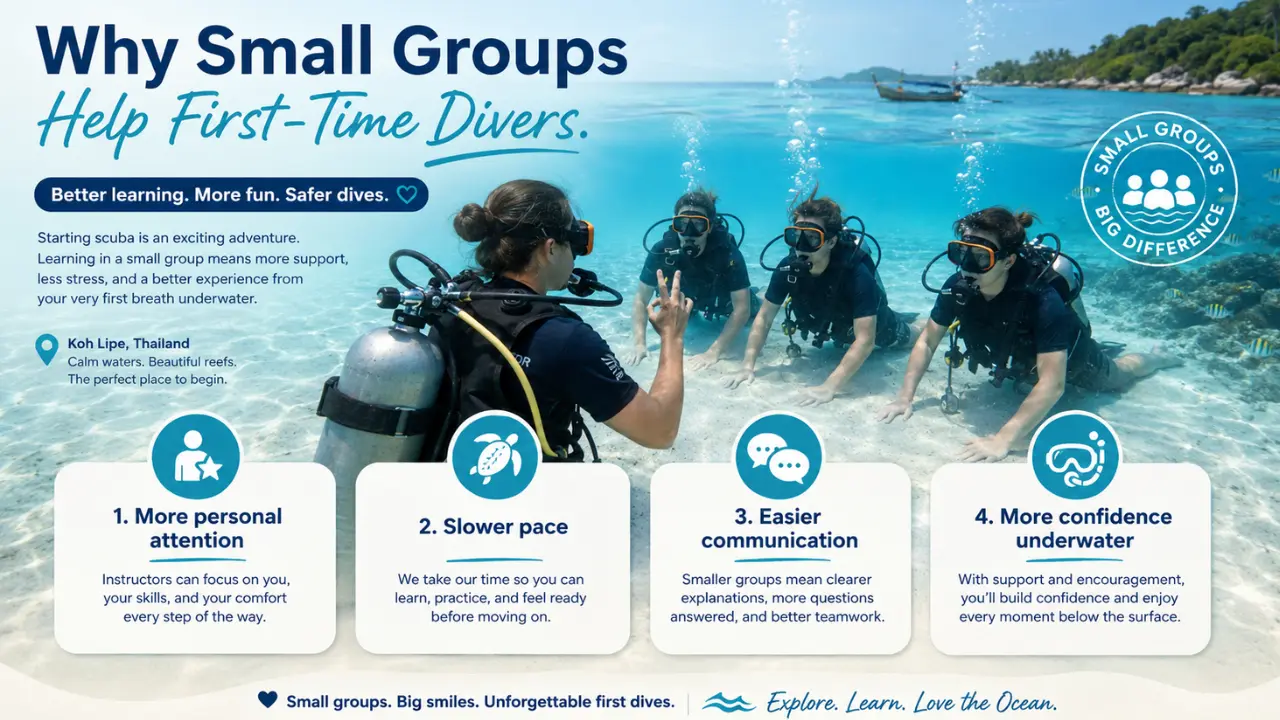
Two things have the biggest impact on your first scuba diving experience. The first is calm water. The second is a small group size.
Koh Lipe has many shallow and calm dive sites. These conditions are ideal for beginners and anyone who feels nervous about their first dive.
Small dive groups allow your instructor to spend more time with you. You get more guidance and support throughout the dive.
At La Bombona Diving, beginner groups are kept small. This gives every first-time diver more personal attention and enough time to learn at a comfortable pace.
Scuba Diving Tips for Beginners
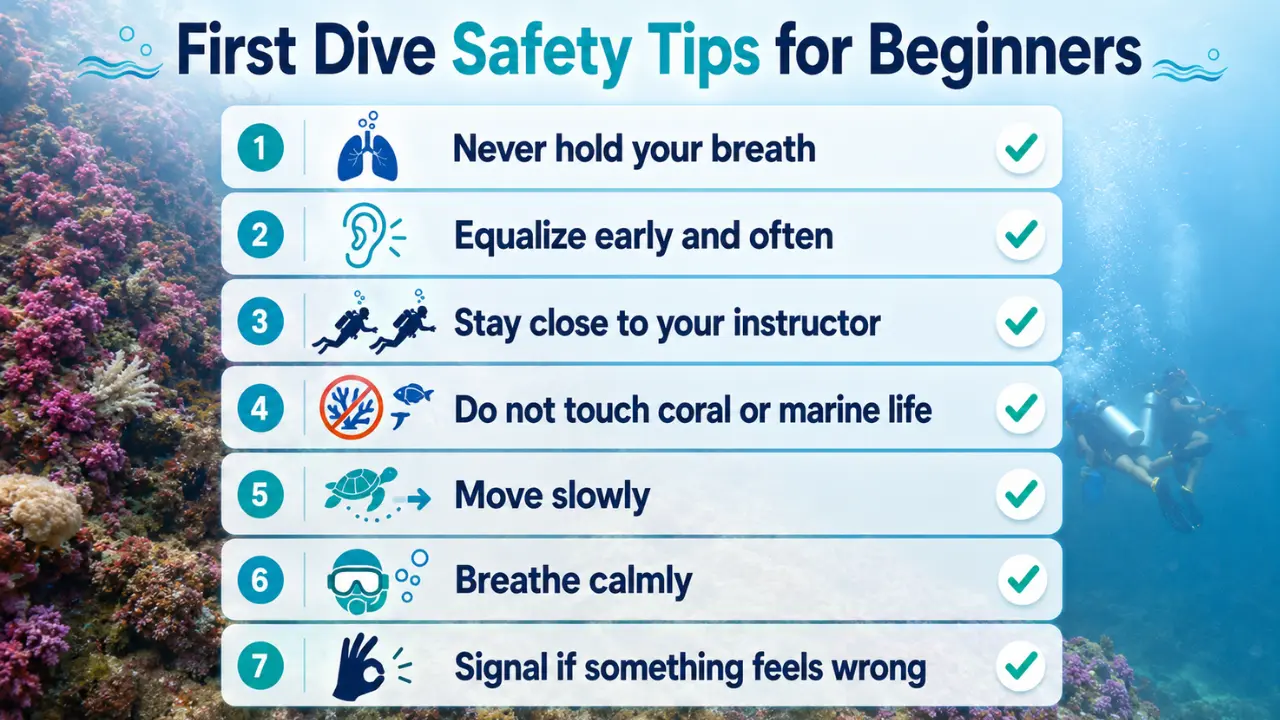
Keep these simple tips in mind during your first dive:
- Never hold your breath. Breathe slowly and continuously, even when you are at the surface.
- Equalize your ears early and often. Do not wait until they start to hurt.
- Do not touch corals, fish, or the seafloor. This keeps you safe and helps protect the reef.
- Use your legs to swim. Let your fins do the work and keep your hands relaxed.
- Descend and ascend slowly. Moving too quickly can cause discomfort.
- Stay close to your instructor, especially during your first few dives.
- Tell your instructor right away if something does not feel right. Small problems are much easier to fix when you speak up early.
How to Learn Scuba Diving After Your First Experience
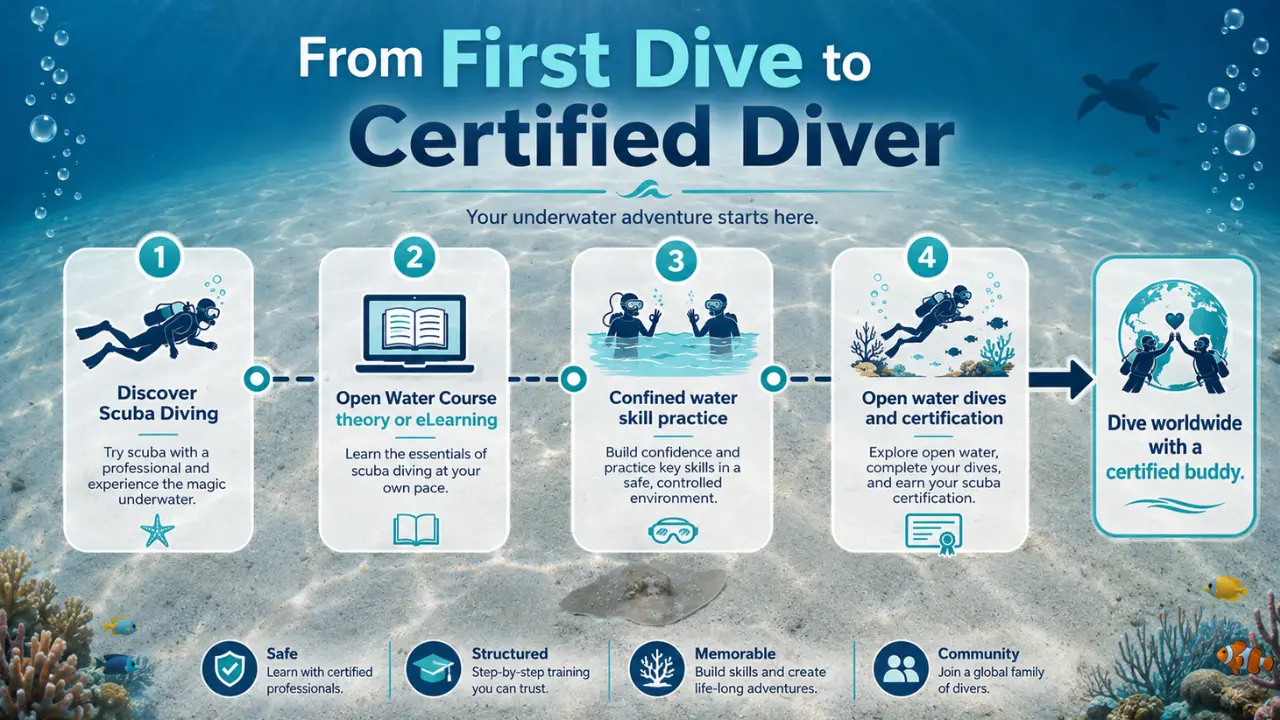
If you enjoy your first dive, the next step is to take an Open Water certification course. The course usually includes:
- Theory or eLearning lessons about scuba equipment, diving safety, and the basics of diving.
- Confined water training in a pool or a pool-like environment where you practice essential scuba skills.
- Open water dives where you use the skills you learned during training.
After you earn your certification, you can scuba dive with a certified buddy anywhere in the world. You can also continue your training with specialty courses such as deep diving, wreck diving, or night diving. Around Koh Lipe, experienced divers can also explore advanced dive sites like Stonehenge and 8 Mile Rock.
Ready to Try Your First Dive in Koh Lipe?
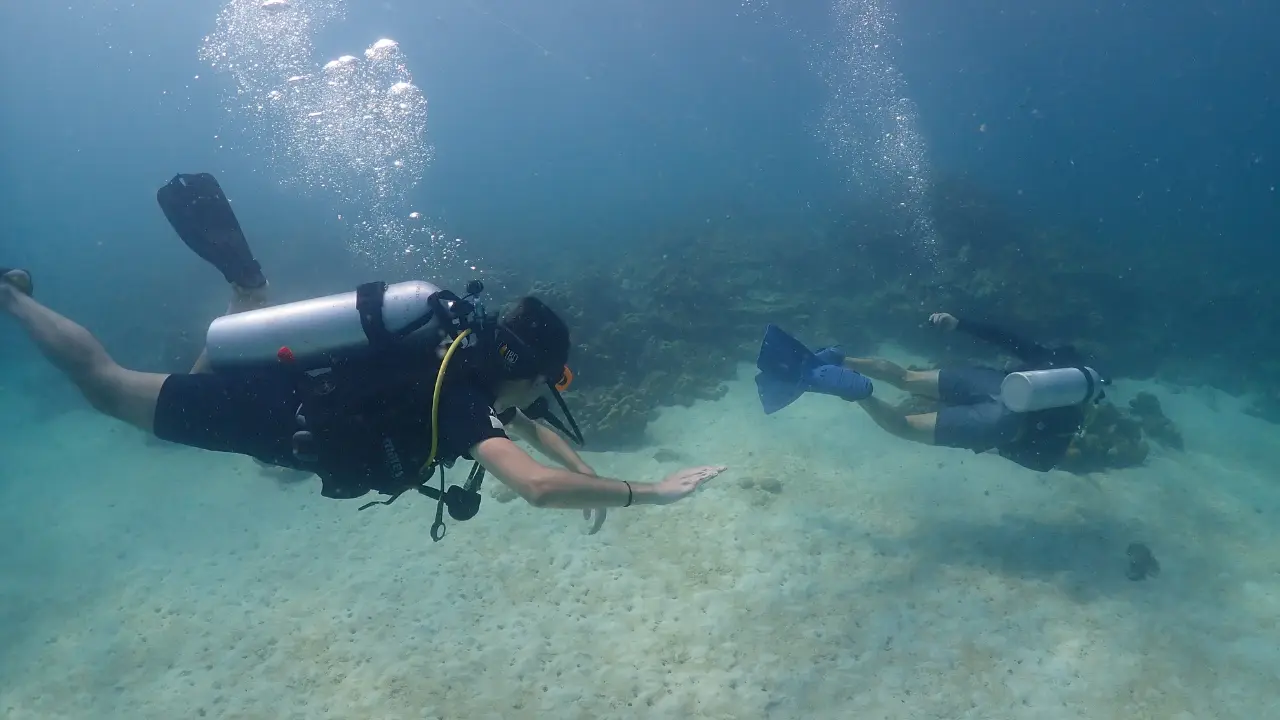
Your first scuba dive should be exciting and enjoyable. With experienced instructors, small group sizes, and beginner-friendly dive sites, La Bombona Diving makes it easy to feel comfortable in the water.
If you have never tried scuba diving before, a Try Dive is the perfect place to start. It lets you experience breathing underwater in a safe and supportive environment. If you enjoy it, you can take the next step and earn your scuba certification.
 Compartir